Department Co-ordinator: Sarah Meade
Provision of Computer Science in the School:
Computer Science is the study of computing and algorithmic processes. Leaving Certificate Computer Science aims to develop and foster the learner’s creativity and problem solving, along with their ability to work both independently and collaboratively. It includes how programming and computational thinking can be applied to the solution of problems, and how computing technology impacts the world around us.
All students get the opportunity to study Computer Science in transition year and have the option to choose the subject further on entry to 5th year. There may be prospects to expand this subject to Junior Cycle level in the form a short course in coding.
Timetabling
Transition Year – Two classes per week (Typically two single periods in the computer lab).
Fifth & Sixth Year – Five classes a week (Typically two doubles classes and one single class).
The subject is taught at both Higher and Ordinary level.
Facilities/ Resources & ICT
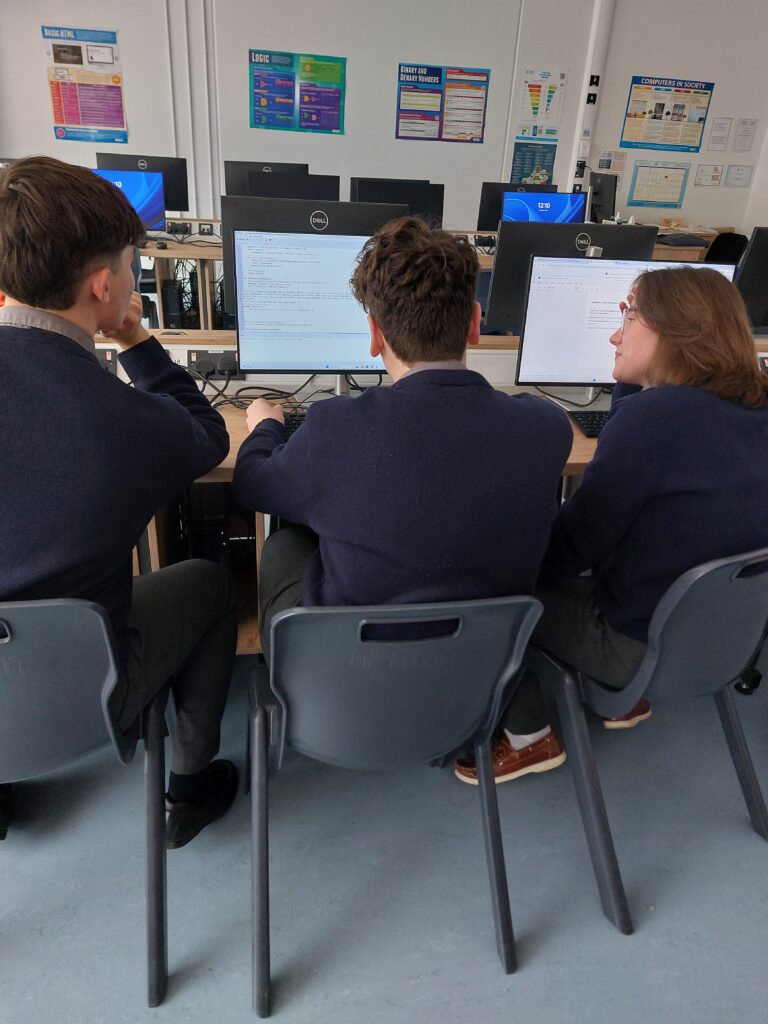
Students at O’Carolan College have access to a state-of-the-art computer room with a suite with the appropriate software installed for use throughout their course of study. Other resources include Micro:bit devices with advanced accessories and “Computer Science for Leaving Certificate” textbooks by Brett A. Becker and Keith Quille.
ICT is embedded in the Leaving Certificate Computer Science course with students using the Python programming language to read, write and test computer programs and HTML and CSS languages to build and designwebsites. As well as this, students will learn how computers work and discover the history and impart of computers on society.
Planning and Preparation
Professional Development was undertaken with the Oide Computer Science team. This training has enabled teachers from all over the country to connect regularly and discuss different aspects of the course. Oide regularlydelivers tailored workshops that cover all aspects of the Leaving Certificate Computer Science course and deal with new and emerging trends in the world of Computer Science.
Teaching and Learning
The Computer Science course is split into three strands of learning: Practices and Principles, Core Concepts and Computer Science in Practice.
These strands are further divided into 59 Learning Outcomes that are achieved through a combination of theory, programming practice and computational thinking problems. There are four collaborative Applied Learning Tasks that are completed as part of a group and encompass a large number of the Learning Outcomes mentioned above.
To fulfil these ALT tasks, students must:
- Create an artefact or website that can display information from a database.
- Create an interdisciplinary artefact using some form of analytics.
- Develop a computer system that simulates or models a problem that is difficult to solve analytically.
- Implement an embedded system that uses sensors and controls digital inputs and outputs.
These artifacts may include programs, simulations, visualisations, games, digital animations, robotic systems, and apps that are personally relevant to them or their peers. These Applied Learning Tasks are designed to prepare students for an individual project that they will complete between Christmas and March of their sixth year.
Assessment
Ongoing assessments throughout the course of work include:
- Monitoring homework
- Continuous assessment tests in class
- Assessment of Applied Learning Task artifacts and reports.
- End of term exams (1 hour 20 minute duration)
For the Leaving Certificate Examination there are two assessment components:
Assessment Component | Weighting | Duration |
Practical coursework project | 30% | 10 – 12 weeks |
Written Examination – Section A&B (Short & long answer questions) – Section C (Programming exam) | 70% | 2 hours -1 hour 30 minutes -1 hour |
Please note that unlike other Leaving Certificate subjects, the final Computer Science exam has so far taken place at the end of May of sixth year.
Extra-curricular Computer Science
Bebras Computing Challenge
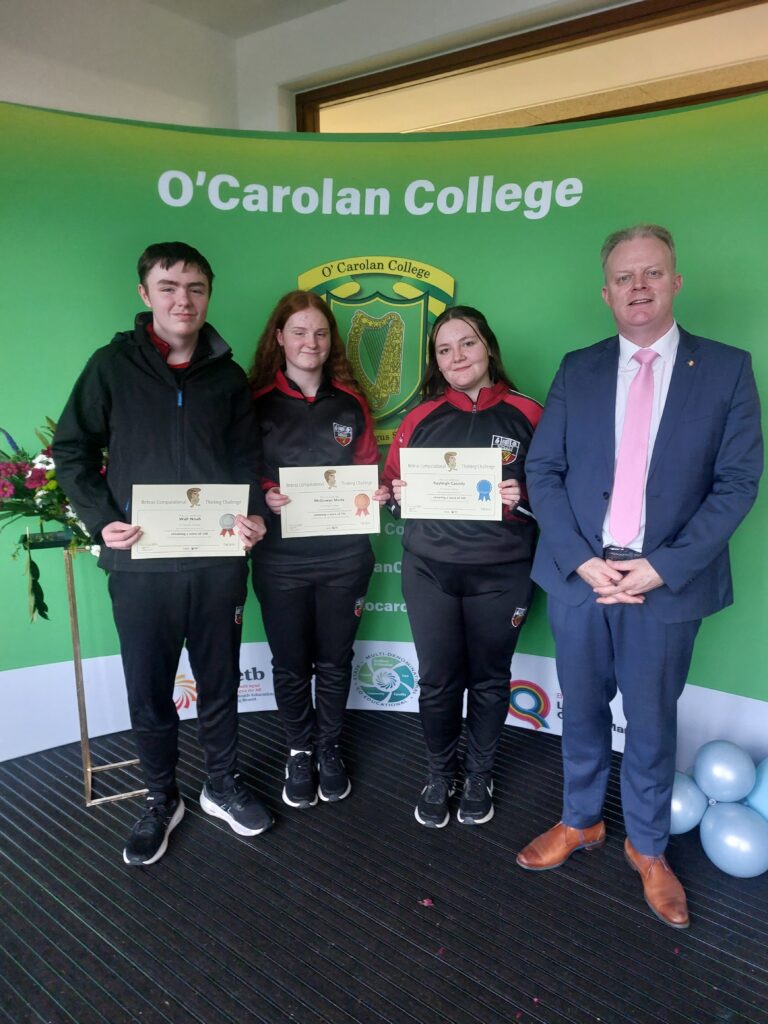
This year, all transition year students as well as the 5th and 6th year Computer Science students entered the International Bebras Computing Challenge. This challenge introduces computational thinking to students, by allowing them to solve interactive tasks online. It is run in over 60 countries and takes place every November. The tasks can be answered without prior knowledge and assesses students’ problem-solving ability. The aim of Bebras is to get students all over the world excited about computing.
This year three of our TY students: Noah Wall, Maria McGowan and Kayleigh Cassidy progressed to the national finals held in Maynooth University on April 18th. Well done to these students and to all students who entered this competition.