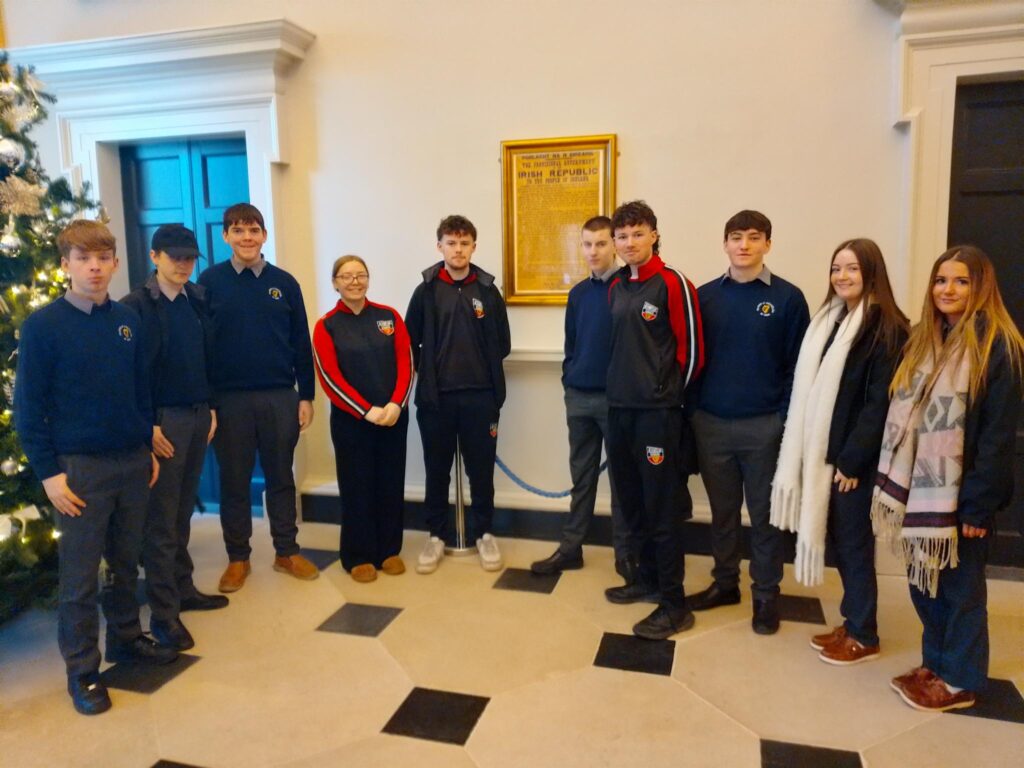
Politics and Society is a course open to Leaving Certificate students at O’Carolan College, currently being taught by Amanda Scully. The subject aims to inform students about how social and political institutions work at local (school and community), national, and global levels. It also aims to develop critical thinking skills whilst encouraging active citizenship.
What we learn in Politics and Society?
Few subjects are as relevant to our everyday lives as Politics and Society. Among other things, students have learned about the social systems within which people act locally, nationally and more widely, different systems of government and the roles of groups such as multinational companies, non-governmental organisations (NGOs) and intergovernmental bodies in shaping the world we live in. The students have worked with key themes and ideas in the social and political sciences. They have applied these to their school, to the local environment, as well as exploring how they apply in the wider world.
The course covers the following topics:
TOPIC 1 | Power and decision making in schools |
TOPIC 2 | Power and decision making at national and European level |
TOPIC 3 | Effectively contributing to communities |
TOPIC 4 | Rights and responsibilities in communicating with others |
TOPIC 5 | Human rights and responsibilities in Ireland |
TOPIC 6 | Human rights and responsibilities in Europe and the wider world |
TOPIC 7 | Globalisation and identity |
TOPIC 8 | Sustainable development |
How students learn?
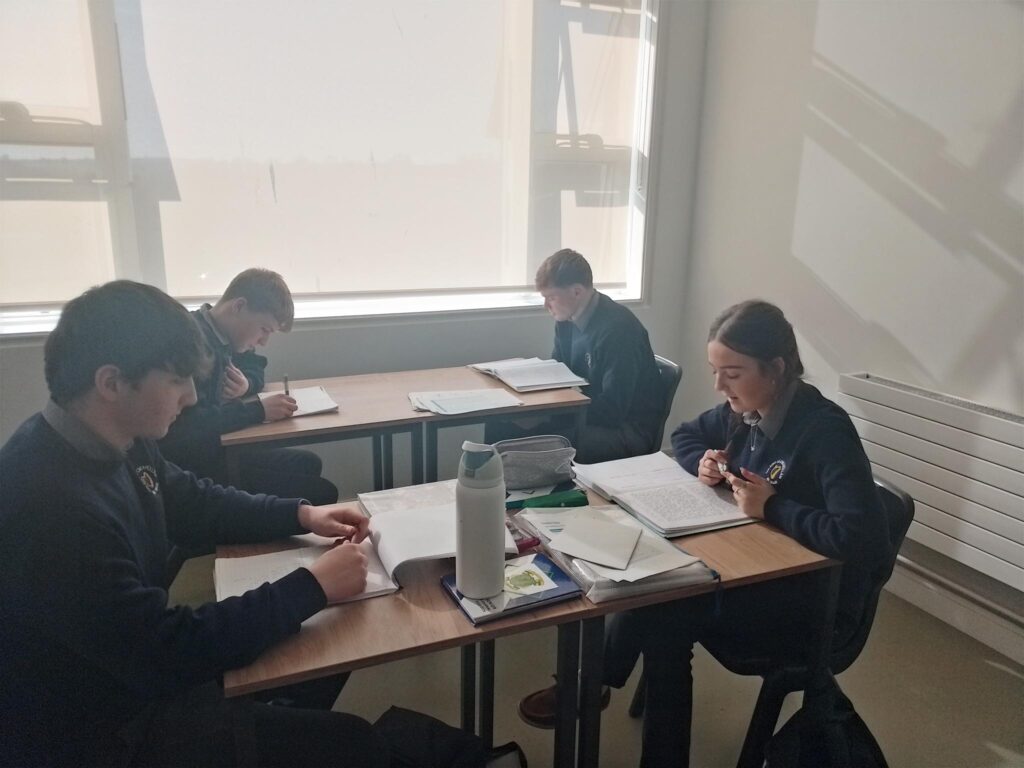
Students learn about social and political theories and how these theories relate to current issues. There was lots of classroom discussion, debate and reflection on the different ideas and perspectives. Through this, students developed valuable analytical and evaluation skills as they debated topical and sometimes controversial issues, studied different viewpoints and formed their own political opinions.
How is it assessed?
Politics and Society is assessed at two levels, Ordinary level and Higher level. There are two assessment components at each level – a written examination which accounts for 80% of the final grade and a citizenship project which accounts for 20%. The citizenship project enables pupils to research a topic and take active citizenship action based on their research. In their report pupils describe their action and reflect on their role as active citizens considering their studies.
Active Classroom
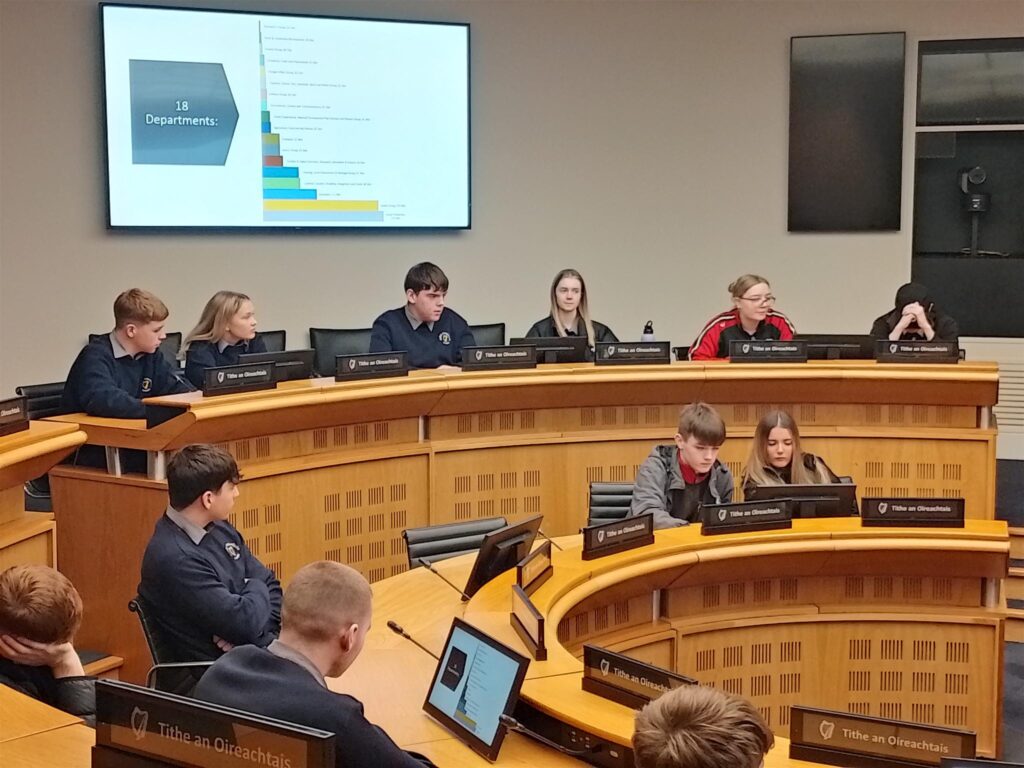
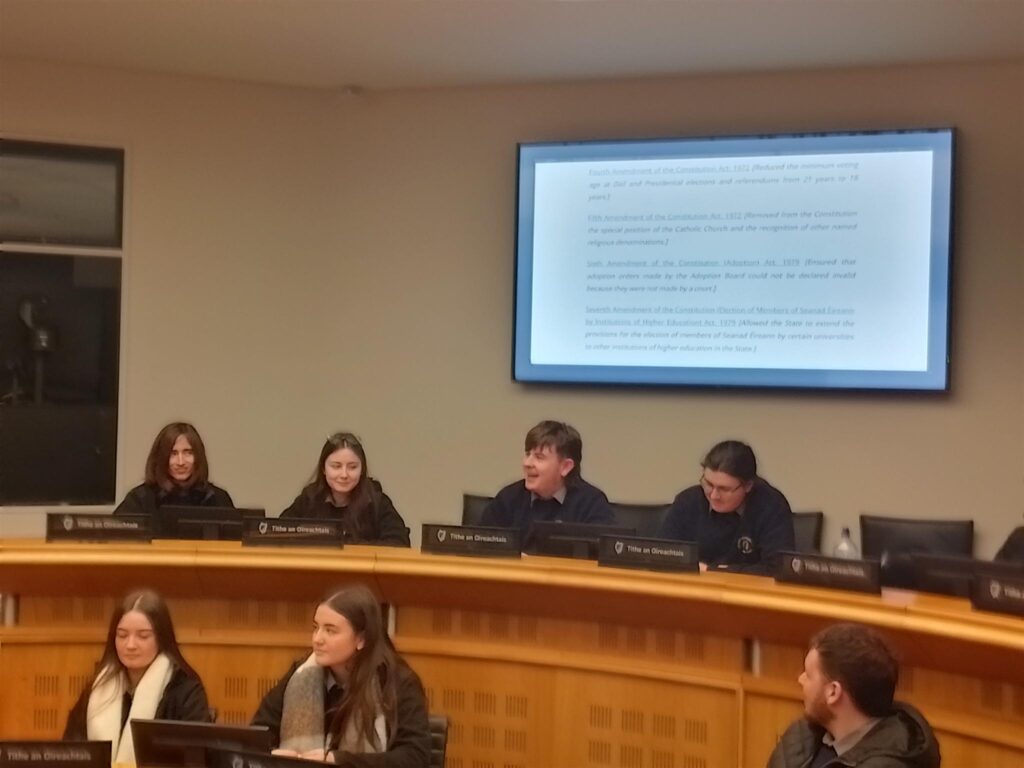
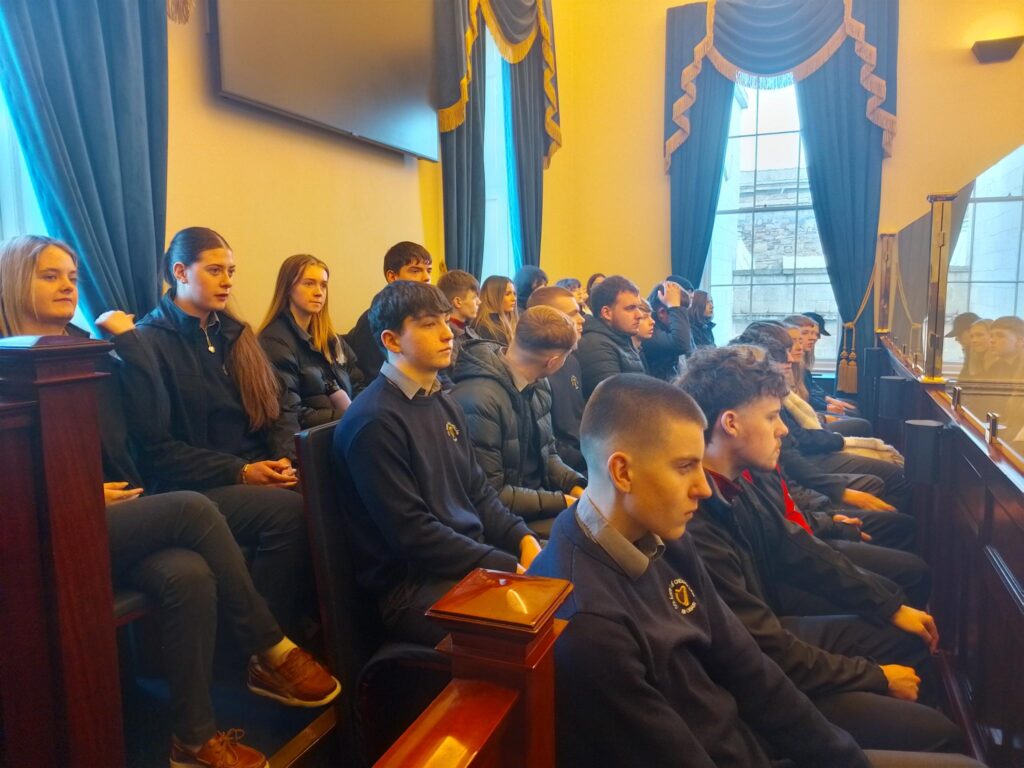
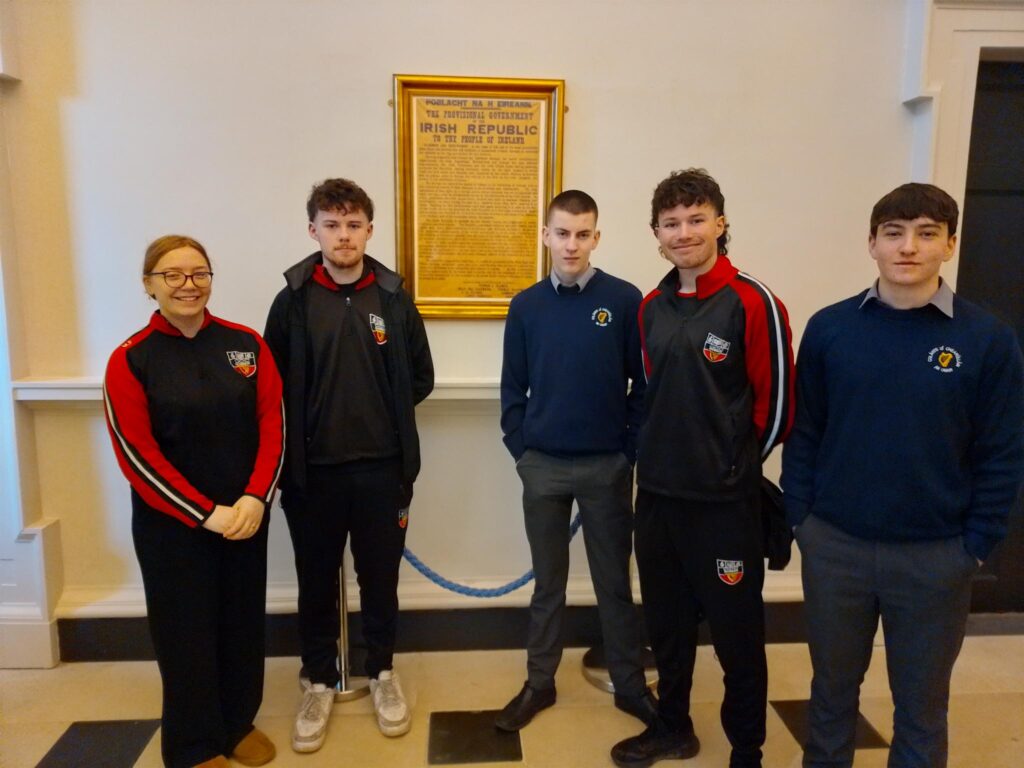
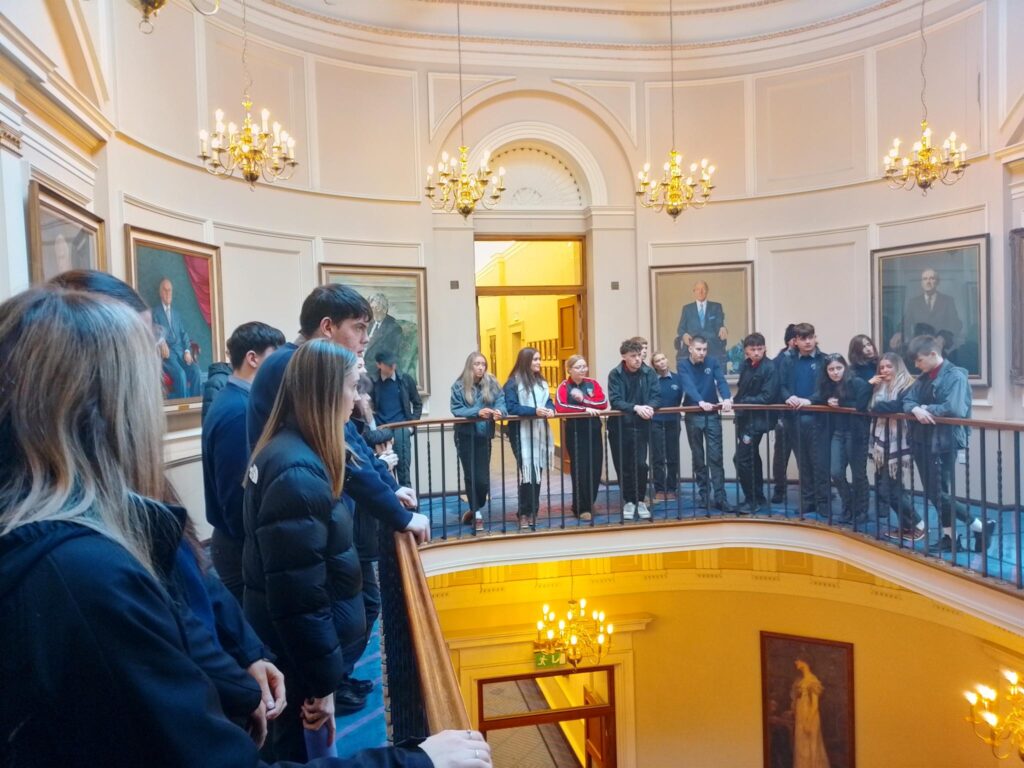
The 5th year and 6th Year students visited Leinster House and had a tour of the Dail and Seanad chambers, as well as getting to debate the hot topics of the day in Committee Room 2.
A Mock Presidential Election was held in September by some 6th years and the 5th years ran the count centre, before declaring the OCC choice for the Aras.
5th years debated the need for school rules with our principal Mr. Goggins.
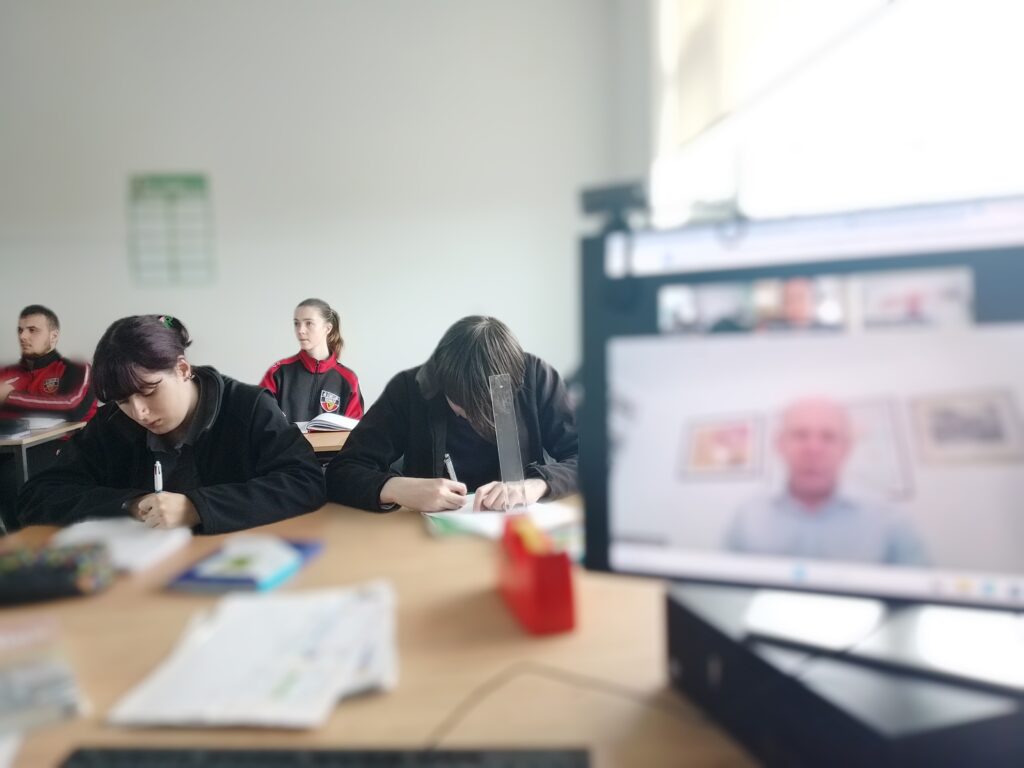
6th years went live online to New York for a Q&A session with the Irish Ambassador to the U.N. Fergal Mythen.
Many walking debates, active research and even speed dating on topics such as social inequality, took place in the classroom.
| TOPIC 1 | Power and decision making in schools |
| TOPIC 2 | Power and decision making at national and European level |
| TOPIC 3 | Effectively contributing to communities |
| TOPIC 4 | Rights and responsibilities in communicating with others |
| TOPIC 5 | Human rights and responsibilities in Ireland |
| TOPIC 6 | Human rights and responsibilities in Europe and the wider world |
| TOPIC 7 | Globalisation and identity |
| TOPIC 8 | Sustainable development |
How students learn?
Students learn about social and political theories and how these theories relate to current issues. There were lots of classroom discussion, debate and reflection on the different ideas and perspectives. Through this, students developed valuable analytical and evaluation skills as they debated topical and sometimes controversial issues, studied different viewpoints and formed their own political opinions.
How is it assessed?
Politics and Society is assessed at two levels, Ordinary level and Higher level. There are two assessment components at each level – a written examination which accounts for 80% of the final grade and a citizenship project which accounts for 20%. The citizenship project enables pupils to research a topic and take active citizenship action based on their research. In their report pupils describe their action and reflect on their role as active citizens considering their studies.
Active Classroom
The Politics and Society classroom has been a hive of activity this year with several guest speakers, including activist Eoin Cassidy, a past pupil currently doing a master’s in law. The 5th year and 6th Year students visited Leinster House and had a tour of the Dail and Seanad chambers, as well as getting to debate the hot topics of the day in Committe Room 2. Both groups also worked on their Citizenship Projects; the 5th years began theirs whilst the 6th years finished theirs for submission to the State Examinations Commission.