Department Members
Kelley McCormack, Katie Reynolds
Provision of subject in the school
Art is an optional subject for First Year students. The subject must then be kept until Junior Cycle. Students may choose it as an option again on entry to Fifth Year. Only in exceptional circumstances will students who have not completed the Junior Cycle Art course be allowed to do Leaving Certificate Art. Evidence of artistic skill in the form of sketchpads or portfolios must be presented to the Art Department. Art is offered at Common level for Junior Cycle and at Higher or Ordinary for Leaving Certificate. All Transition Year and L.C.A students study Art as part of their programs.
Time Allocation
| Junior Cycle | Two double periods per week |
| Leaving Certificate | Two double and one single period per week |
| Transition Year | One double period per week |
| Leaving Cert Applied | One double period per week |
Junior Cycle Visual Art
The specification for Junior Cycle Visual Art focuses on the students’ practical and cognitive engagement with art. Students will be enabled to progressively improve their skills as an artist/ craftsperson/designer in a space that is safe for them to explore ideas and diverse processes both creatively and imaginatively. This can be achieved through the interconnected strands of the disciplines of art, craft and design. A student will experience learning in each of these three strands as they progress through their junior cycle.
Visual Art
Art, or fine art, is the expression of creative skill in a visual form. It emphasises ideas, feelings and visual qualities through imaginative and/or technical skill. Apart from the creation of artworks, fine art also encompasses the study of art through appreciation and critical discussion.
Craft is the application of a range of artistic skills and knowledge to produce artefacts of aesthetic worth. With an emphasis on processes and materials, the artefacts created may represent either traditional crafts or a more individual approach by the craftsperson.
Design is the process of planning, problem solving and creating. It can be a response to a brief, a need or a situation. Emphasising the process of planning, problem solving and completion, with drawing as a means of thinking, formal visual elements and imagery are used to communicate messages and ideas
Each element focuses on the acquisition of new knowledge, skills and values. As the student progresses through each of the strands, there will be systematic development of their fundamental knowledge, principles and values, including the key skills through each of the elements.
Junior Cycle Assessment Procedure for Art
Second year
CBA 1 From Process to Realization; Visual Art sketchpad + 1 realised work
Students, either individually or in a group, choose one scenario from a list prepared by the NCCA. They then generate ideas, experiment and develop these ideas in their Visual Art sketchpad, and realise an artwork through one of the three strands.
End of April: One review meeting
Third year
CBA 2 Communicate and reflect
Presentation Individually, students choose one scenario from a list prepared by the SEC and NCCA to generate ideas, experiments and other preparatory work in their Visual Art sketchpad. Students present this initial research and work through the two remaining strands not undertaken as part of the first Classroom-Based Assessment. This presentation of ideas and preparatory work is assessed, and students reflect on the feedback they receive. Presentation completed: Between mid-December and mid-January.
State-certified examination After Classroom-Based Assessment Two is completed, students will both significantly develop their ideas further and realise two pieces of work for the state certified examination. These pieces of work are based on the two strands not undertaken for the classroom-Based Assessment in second year. Realised works and associated development work will be submitted for SEC assessment by early May.
Leaving Certificate Art
The Leaving Certificate Art curriculum has been reviewed in recent years. The new specification is presented in three strands: Research, Create and Respond.
The three interlinked and interdependent strands of Research, Create and Respond also serve to signify the importance of the symbiotic relationship between the learner, the practical work with which they are involved and their understanding of the place of, and emphasis on, Visual Studies within their work.
There are three assessment components in Leaving Certificate Art
- Practical coursework (Booklet and 1 Artefact)
- An invigilated examination (Craft)
- A written examination (Visual Studies)
| Assessment Component | Weighting | Level |
|---|---|---|
| Practical coursework | 50% | Higher and Ordinary |
| Invigilated Examination | 20% | Higher and Ordinary |
| Written examination | 30% | Higher and Ordinary |
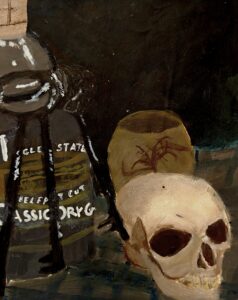
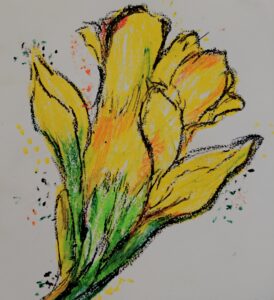
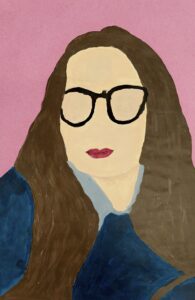
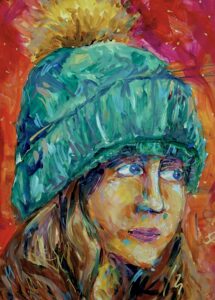
The Practical coursework will be covered in a specified period between January and March each year. This project involves filling a workbook with exploration and developmental artwork, culminating in the design and execution of two Artefacts. The emphasis is on using primary sources for these projects.
Transition Year Art
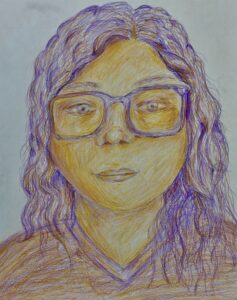
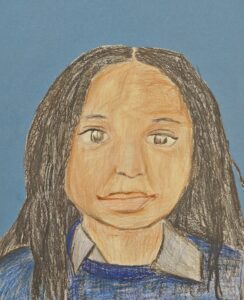
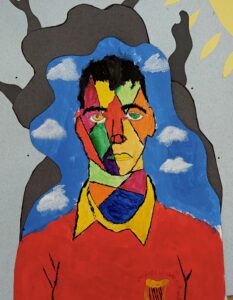
This year, the TY art group focused on developing their observational and creative skills through a variety of engaging projects. A key part of their work was the creation of self-portraits, where each student explored different media based on their individual strengths and interests. This allowed them to express their identity while building confidence in their chosen techniques.
Throughout the year, students also worked on strengthening their fundamental drawing skills. They studied facial features in detail, learning how to accurately represent eyes, noses, mouths, and overall facial structure. Emphasis was placed on understanding proportion and placement to achieve more realistic results.
In addition, the group was introduced to the grid drawing method, which helped them improve accuracy and scale in their work. This technique supported their ability to break down complex images into manageable sections, enhancing both precision and confidence in their drawing practice.
L.C.A
This year, the 5th Year Leaving Certificate Applied students successfully completed their General Education Task within Art, demonstrating both creativity and strong engagement with the course.
As part of their Key Assignment, each student designed and produced a self-portrait using lino printing techniques, in line with syllabus requirements. Working within the theme “Individuality and Identity,” students explored personal expression and visual storytelling, carefully developing their ideas from initial sketches through to final prints. The project allowed them to experiment with composition, contrast, and texture while refining their technical skills in printmaking.
A key component of the assessment process involved a visit from an external examiner, who interviewed each student and reviewed their completed artwork. The class performed exceptionally well during this stage. Students presented their work with clarity and insight, and were noted for their calm, confident manner when discussing their creative processes and the meaning behind their pieces. Overall, their performance reflected both their effort and their growing confidence as young artists.
Facility
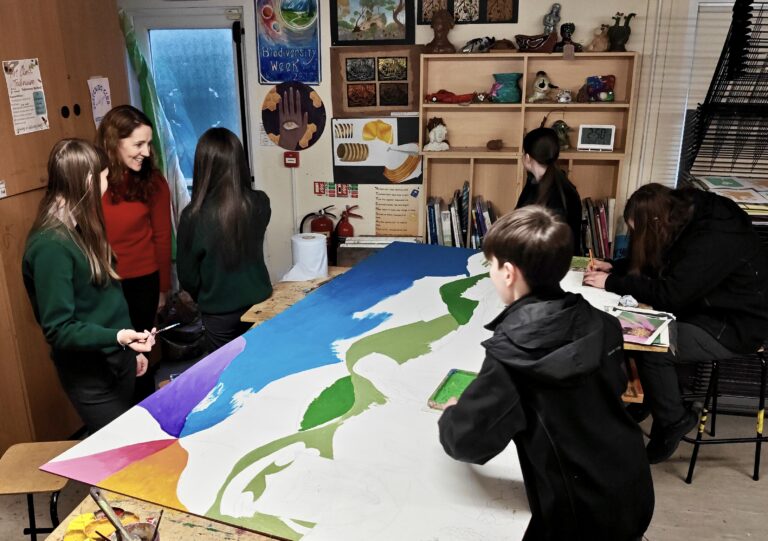
The Art Department in O’Carolan College is supported by two modern, purpose-built art rooms, designed to provide students with a dynamic learning environment.
Both art rooms are bright, spacious, and fully equipped to support a wide range of artistic practices across junior and senior cycle. The rooms provide dedicated work areas for drawing, painting, printmaking, ceramics, and mixed media, allowing students to explore and develop their skills in a structured yet creative setting. Each room is fitted with its own kiln, enabling students to engage in clay work and experience the full process of ceramic design, from construction through to firing.
Ample storage is available for student work and materials, ensuring an organised and functional workspace, while an additional dedicated storeroom supports the safe and efficient management of resources. Located on the top floor of the new building, both art rooms also benefit from access to a balcony area, providing additional space and a bright, open atmosphere that enhances the overall learning environment.
Planning and Preparation
Department meetings are held at the beginning of each term and intermittently throughout the year. The Art teachers are members of the ‘Art Teachers Association of Ireland’, and regularly attend a variety of in career training courses throughout the year.
Resources
- Junior cycle workbook; ‘Art Odyssey’ by Grainne McKeever, Nadine McDonagh Cunningham & Catherine Kavanagh.
- Senior Cycle textbook; ‘New Appreciating Art, Visual Studies for Leaving Cert’ by Aine Ni Chartaigh and Aidan O’Sullivan.
- Mini library of reference books.
- Wall charts and diagrams.
- Interactive activity board.
- Collection of student artwork on display.
- Overhead projector.
- Art and crafts tools and materials.
Art Competitions
Our art students are encouraged to take part in local & National Art competitions. These Competitions Include:
– LMETB Robert Ballagh Art & Photography Competition
– Link Credit Union Art Competition
– Texaco Childrens Art Competition
– Toyota Dream Car Art Competition
We also hold many in house OCC Art Competitions Including:
‘Nature’ Photography Competition – Part of Creative February
Artist of the Week
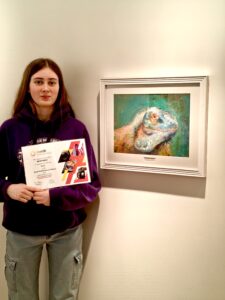
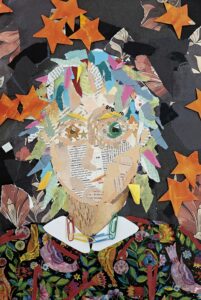
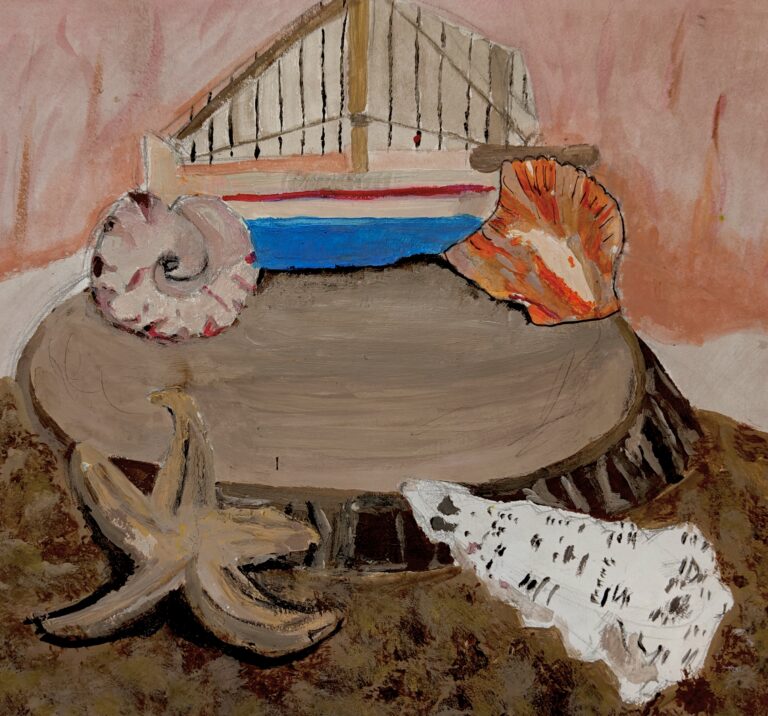
The Art Department introduced the Artist of the Week award a number of years ago as a way to celebrate and promote student achievement within the art room. This initiative recognizes creativity, dedication, and individuality, with one student selected each week by the Art Department staff.
The chosen student’s work is showcased on a dedicated Artist of the Week display board in the art room, creating a vibrant and inspiring visual celebration of their achievement. In addition, their work is featured on the school’s Instagram account, providing a wider platform to acknowledge and share the high standard of creativity and effort demonstrated by students. This initiative continues to foster a positive and motivating atmosphere, encouraging all students to take pride in their artistic development.
Creative Schools Programme
The Art Department is delighted to be participating in the Creative Schools Programme over the next two years. This initiative will provide valuable opportunities for students to engage with creative practitioners and explore new and innovative art forms. Through this programme, the department aims to further enrich students’ artistic experiences, encourage creative thinking, and support a whole-school approach to creativity and the arts.
As part of the Creative Schools Programme, a Creative Committee has been established, with student representatives from all year groups across the school. This committee plays an active role in shaping the direction of the programme, contributing ideas and supporting the planning and coordination of creative initiatives. A key focus of their work has been exploring effective and inclusive ways to engage the entire school community in creative activities, with exciting plans already being developed for the coming year.
Members of the committee have also taken part in a range of workshops to support their role, including a mindfulness-based art workshop using found materials, which encouraged creativity, collaboration, and wellbeing. In addition, they successfully organised and ran a whole-school photography competition in February, showcasing student talent and encouraging wider participation in the arts.
Art Outside the Classroom
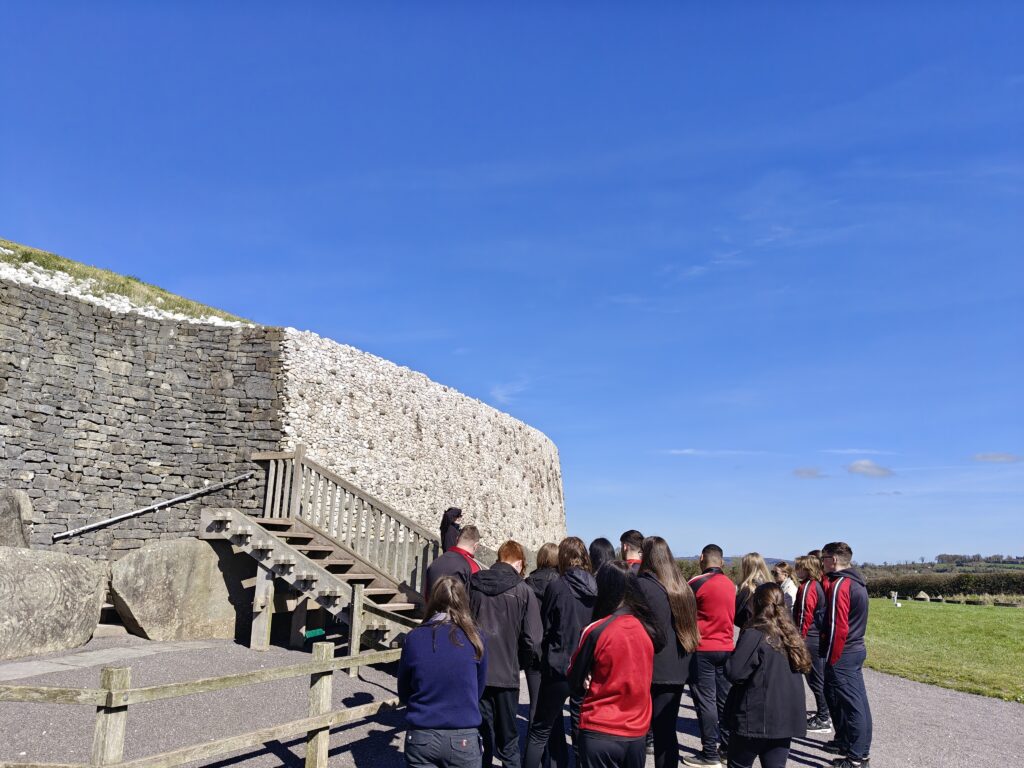
Pupils are encouraged to look at and respond to art in its many forms both historically and in today’s world. To facilitate this, visits are arranged to museums, Galleries and Heritage sites in Ireland.